
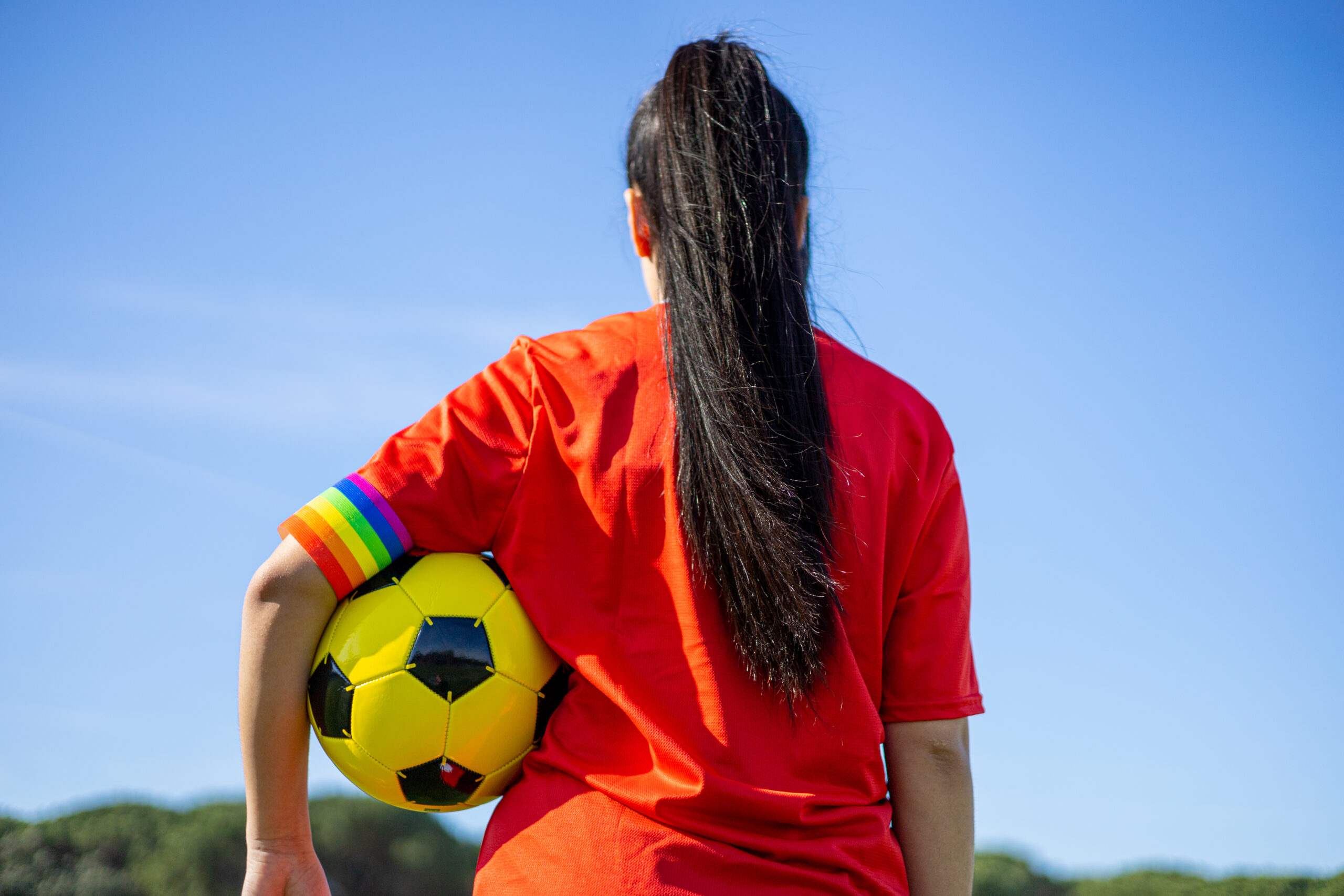
Sports have always been about more than winning; they’re about identity, belonging, pushing limits, and finding out what you’re made of. For LGBTQ+ athletes, that experience carries an extra layer, one that can be isolating at times, and profoundly powerful at others.
Whether it’s “harmless” jokes in the locker room or hearing slurs on the team bus, it is not easy to be “out” on a team. Let’s be honest- these spaces weren’t always built with LGBTQ+ athletes in mind. But that’s changing, thanks in large part to the trailblazer athletes who chose to show up as their full selves, risking all consequences.In fact, these experiences are exactly why LGBTQ+-affirming sports psychology matters so much.
This post is not only for the trailblazers, but also for every LGBTQ+ athlete still figuring out what showing up fully authentically means for them.
1. To Come Out or Not Come Out, That Is the Question
Let’s start with the ones that sit heaviest: Do I want to tell people? Do I feel safe enough to do so?
There’s no universal right answer; it truly depends on each person’s circumstances. Coming out as an LGBTQ+ athlete is an intensely personal decision, one that’s shaped by your sport, your team culture, your family, your level of competition, and about a hundred other variables that outsiders rarely see.
For some athletes, coming out brings an enormous sense of relief. The energy spent managing who knows what, carefully editing conversations, keeping different versions of yourself in different rooms, can be exhausting. Imagine the benefits of that energy going toward your training, your recovery, your relationships, and your performance.
For others, the calculus is more complicated. Concerns about team dynamics, scholarship implications, media scrutiny, sponsor reactions, or simply not being ready, are all valid. Coming out is not a requirement for being a “good” LGBTQ+ person or athlete. The timeline is yours and plenty of athletes wait until retirement to speak their truth (if at all).
However, what the research does tell us, and what we see in practice, is that living inauthentically has a psychological cost. Constantly monitoring yourself, code-switching, and carrying a secret creates chronic stress that affects mental health and, often, performance. That doesn’t mean the solution is always to come out publicly. But it does mean the internal work, knowing yourself, accepting yourself, building a support system where you can be fully you, matters enormously.
2. Changes in Teammate Dynamics and Fan Reactions, The Real and the Complicated
When an athlete does come out, two of the first things they wonder about are: how will people react? how will this impact my career?
The honest answer is: it varies. A lot.
The good news: team culture has shifted dramatically in recent years. Many athletes report that their teammates’ responses were more supportive, even enthusiastically so, than they anticipated. The fear of rejection often turns out to be worse than the reality. When you’ve been sweating through two-a-days together, running sprints, and showing up for each other in high-pressure moments, bonds tend to run deeper than differences.
The more complicated reality: not every locker room is a safe space. Some athletes face awkwardness, distance, or outright hostility. Others find that nothing changes on the surface, but something subtle shifts, a joke that doesn’t land the same way, a teammate who goes quiet. These experiences are real, they hurt, and they deserve to be taken seriously rather than minimized.
Fan reactions add another dimension entirely. Social media has made fan opinion more visible, and more volatile, than ever. An openly LGBTQ+ athlete may receive an outpouring of support and visibility that feels electric. They may also attract criticism, trolling, or outright bigotry. Oftentimes in the same hour.
Navigating all of this while also trying to compete is no small feat. It’s one reason mental performance support isn’t a luxury for LGBTQ+ athletes, it’s often a necessity. If you are curious about the specific tools we use at Grand Slam Psych to help athletes navigate these dynamics, definitely check out our breakdown of 5 DBT skills every athlete should know.
3. Becoming a Symbol, And Sometimes, an Icon
Here’s something that doesn’t get said enough: coming out as an athlete is a public act with real consequences for people who never meet you.
When Brittney Griner, Megan Rapinoe, Carl Nassib, or Tom Daley stepped into their full identities publicly, something happened. Across the country, and around the world, LGBTQ+ kids watching sports saw themselves in a winner. In a champion. In someone who was thriving.
That visibility matters in ways that are hard to quantify but easy to feel.
The flip side is that it comes with weight. When you’re one of the few out athletes in your sport, you can quickly become the LGBTQ+ athlete, the spokesperson, the representative, the symbol. Every stumble gets amplified. Every triumph becomes a political statement. You might not have signed up for any of that. You just wanted to play your sport and be honest about who you are.
The psychological tension of being a symbol while also trying to be a person, a teammate, a competitor, a human being who has bad games and off days, is real and often underappreciated. Many LGBTQ+ athletes describe feeling pressure to perform better than their straight peers, as if any misstep reflects on the entire community they’re seen as representing.
Holding all of that, with grace, with grit, and without losing yourself in the process, is genuinely hard. It’s also, for many athletes, one of the most meaningful things they’ve ever done.
4. Reducing Stigma Through Visibility, Why Showing Up Matters
Representation changes culture. It sounds like a bumper sticker, but the data backs it up.
Research consistently shows that people are less likely to hold prejudiced views toward groups they know personally or see represented in spaces they respect. Sports, with their wide reach, their fan loyalty, their culture of toughness and excellence, are uniquely powerful venues for shifting those views.
When an openly gay linebacker makes the game-winning tackle, something shifts in the mind of every fan who cheered for that play. When a transgender swimmer competes at a national level, she makes it harder for the casual observer to hold on to the idea that trans athletes are somehow “other.” Visibility, repeated over time, normalizes. And normalization saves lives, particularly for young LGBTQ+ people who are still figuring out if there’s a place in the world for them.
LGBTQ+ athletes who come out publicly often describe receiving messages from younger athletes, sometimes kids, sometimes college students, sometimes adults who’ve been hiding for decades, saying: I saw you and I knew I wasn’t alone.
That’s not a small thing. That’s everything.
At the same time, the burden of representation shouldn’t fall entirely on individual athletes. Institutions, teams, leagues, governing bodies, schools, have their own work to do in creating cultures where visibility is possible in the first place. But the athletes who have gone first, often at personal cost, have moved that needle in ways that policy alone never could.
5. More Energy to Be the Best Version of You
Here’s the performance angle that often gets overlooked in these conversations.
Authenticity is not just emotionally freeing, it’s a competitive advantage.
Think about how much cognitive and emotional energy goes into managing a secret. The constant vigilance. The selective disclosure. The mental load of remembering who knows what, what you can and can’t say, which version of yourself is “safe” in this context. For athletes, that energy has a direct cost, it’s energy that isn’t going toward your training, your film study, your recovery, your focus in competition.
Many athletes who have come out describe a kind of lightness afterward. Not that everything became easy, the external challenges are real and don’t disappear. But the internal friction, the constant self-monitoring, the low hum of anxiety that comes from living a double life, that quiets. And in that quiet, there’s more space to perform.
There’s also something to be said for the confidence that comes from radical self-acceptance. Athletes who have done the work of accepting their full identity, and finding a way to hold it with pride rather than shame, often describe showing up differently in competition. More grounded. More themselves. Less rattled by outside noise, because the internal noise has settled.
Your identity is not a distraction from your performance. For many LGBTQ+ athletes, it turns out to be the foundation of it.
You Don’t Have to Navigate This Alone
Whether you’re an LGBTQ+ athlete weighing whether to come out, processing a difficult team dynamic, dealing with the pressure of visibility, or just trying to figure out how to be your best self in a sport that wasn’t always designed for you, these are real challenges that deserve real support.
At Grand Slam Psychological Services, Dr. El McCabe is an openly Queer psychologist who specializes in both sports psychology and LGBTQ+ affirming therapy. She knows this terrain, not just clinically, but personally. She has worked with LGBTQ+ athletes at every level, from high school competitors to professionals, and she brings a level of understanding to this work that goes beyond textbooks.
You don’t have to compartmentalize your identity to compete. You don’t have to choose between being an athlete and being fully yourself. And you don’t have to do any of this without support.
Reach out today, wherever you are in your journey, Grand Slam Psych is in your corner.
If you’re new to the idea of mental performance work, our guide on what sports psychology is and how it works is a great place to start.
Learn more about Dr. McCabe’s approach to LGBTQ+ affirming therapy and what you can expect from the work.