
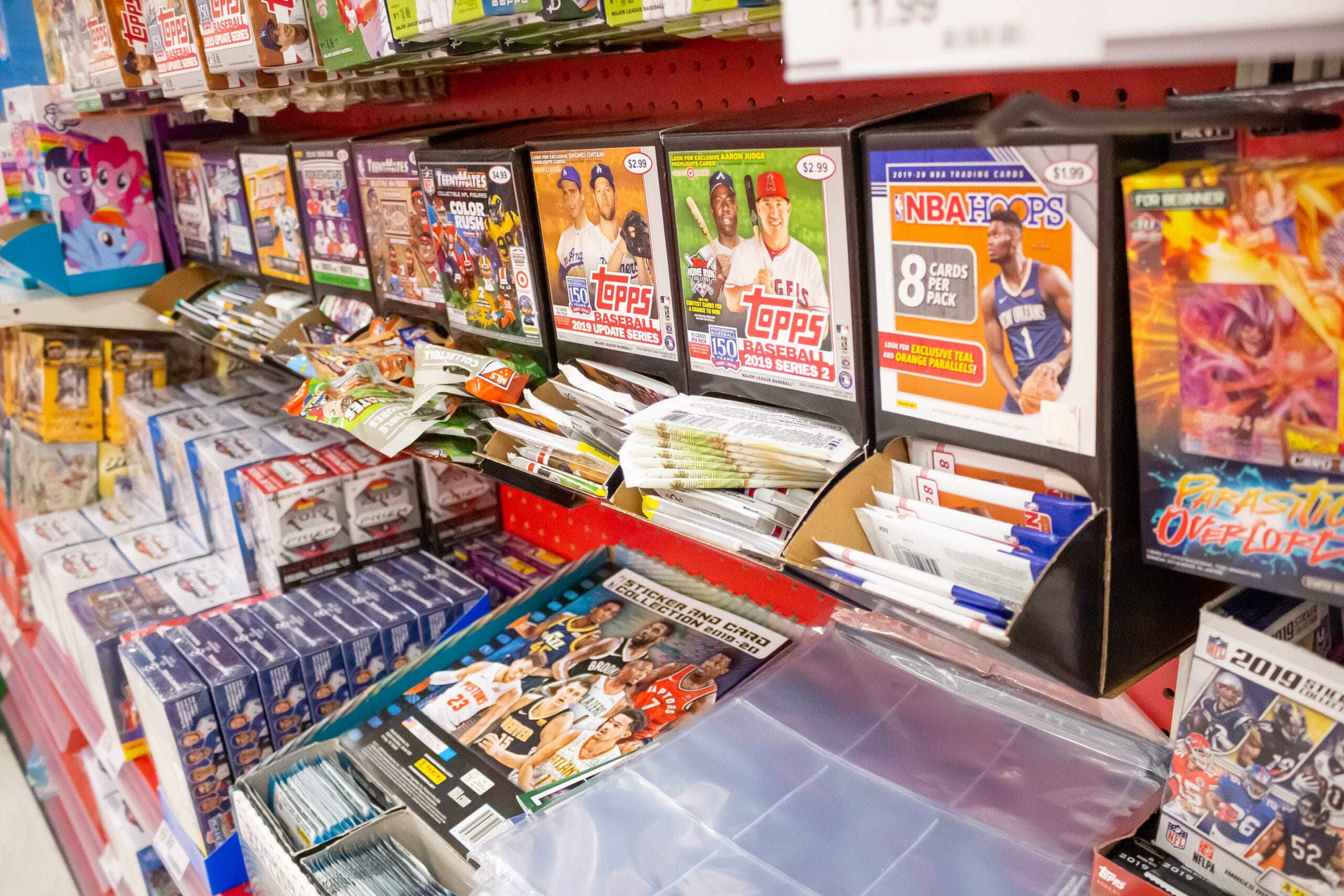
There’s a moment right before you open a pack of cards where everything feels possible; inside could be a rare card you’ve been chasing for months or it could be common card that you already have three copies of. The anticipation is real, hope springs eternal, and in that moment, the hobby transforms into a sport of its own kind.
Card collecting, whether you’re hunting for a first-edition Charizard or a rookie card of your favorite NFL player, taps into something purely psychological. It’s not just about the cards themselves, which are often made of cardboard or shiny paper; it’s about identity, community, achievement, memory, and the human need to organize random information into something meaningful. It can also have a dark side resembling other addictive behaviors and activities that we will also explore below.
Why We’re Drawn to Collecting: The Psychology Behind the Pursuit
Collecting activates several deep psychological systems at once, and that’s why it feels so compelling.
Identity and self-expression: When you build a collection, you’re essentially building a curated, visual representation of aspects of your identity and interests. For instance, a collector who focuses on vintage baseball cards from the 1980s likely prioritizes nostalgia, history, and value in their choice of catrds. A player who collects foil versions of their favorite TGC cards may prioritize aesthetics and rarity, and so on.
Achievement and progress: Collecting can be a channel for achievement of small goals that give little hits of dopamine once completed. You can see your collection grow, track the “missing pieces”, and feel the satisfaction of filling a slot in a set. This is especially powerful for people who might feel stuck in other areas of their lives (i.e. in relationships, at work, in their physical fitness, etc.). While this sense of progress/achievement is real and can be psychologically grounding, it can become all consuming and lead to neglect in other areas of life.
Control in uncertainty: Life can certainly be chaotic (especially in the current sociopolitical climate) and random at times. No one person can control the job market, relationships, or what happens tomorrow. However, you can control your collection by deciding which cards to pursue, which to trade/sell, and how to organize your display. This sense of agency, even in something small, satisfies a fundamental human need to have some control over our environment.
Completionism: There’s something very human in us that craves finishing tasks, activities, chapters, and of course, collections. For example, a set that’s 95% complete can occupy a great deal of brain space until you find that last card. We’re wired to complete patterns, and collecting plays into that directly, which is something that card companies/creators know very well when designing sets to maximize profit.
Community: The Underrated Heart of Collecting
Collecting is often perceived as a solitary activity, however, when you think about it, the hobby is actually built on a sense of community.
For example, local card shops and expositions are popping up at astounding paces all across the United States. In these spaces, collectors and players meet to bond over shared card interests, to show off their latest pulls, trade, and to discuss upcoming set releases. Not every connection in these spaces leads to a friendship, but these moments of connection still go a long way in staving off loneliness for those participating. With the rise of social media/technology and the loneliness epidemic, people spend more time alone, which significantly worsens mental health. In short, society benefits greatly from having shared spaces in which people can spend time face to face with one another and card collecting meetups fit the bill.
However, not all card collecting spaces are in person; for instance, Reddit communities like r/PokemonTCG, Facebook groups, Discord servers, and YouTube channels created virtual spaces where collectors come to connect. For some collectors, especially younger ones or people who struggle with social anxiety, the online card collecting community offers a low-pressure way to belong. You don’t have to be good at conversation to connect over cards; you just have to show up with genuine interest, and the community does the rest.
Touch Points & Memory: Cards as Anchors
One of the most psychologically powerful aspects of card collecting gets overlooked with the focus on monetary value and rarity: cards are touchstones for memory.
A collector might chase a specific sports card because it’s their favorite player from childhood who is not even close to Hall of Famer. Holding that card is like holding a piece of that relationship, even if you never met the player. When you pull that card or finally track it down, there’s often an emotional hit that has nothing to do with resale value and everything to do with nostalgia and connection.
For Pokemon card collectors, a Mewtwo card might represent a specific memory or moment in time when everything felt simpler and smaller; perhaps opening packs with a parent or grandparent or trading in the cafeteria. The card itself becomes an anchor to that memory, so revisiting the card later in life can bring all of that back-the feeling, the person, the era.
For athletes and performers, collecting can also be a way of staying connected to players or people who inspired them. A tennis player might collect cards of legends in the sport, keeping them visible as reminders of excellence and aspiration. That visual touchstone becomes part of your mental landscape.
The Shadow Side: Chasing, Spending,& the Gambling Loop
As with many areas of life, collecting can either be a source of pride, a source of shame, or a combination of both. Though we’ve reviewed all the benefits of collecting, we’d be remiss to not cover the pain points of the hobby. For instance, the mechanics of card collecting can mimic gambling in ways that are worth understanding, especially if you find yourself struggling to control spending or feeling anxious when you’re not opening packs.
The booster box economy: A booster box (typically 36-48 cards) can cost $45-150 depending on the set. Inside, you’re hoping for chase cards that have much higher resale value; however, most of what you pull will be bulk common cards that you don’t need or want. The odds of pulling a specific chase card are low, especially when you buy individual packs or boxes as opposed to a whole set. You may understand the odds mathematically, but you can still get hooked on the hope that this time will be different.
This process of ripping cards is structurally similar to gambling, since you’re spending money on a chance outcome with low odds of a big payout. The dopamine hit when you pull the card you wanted or is very resellable is real. Yet, the disappointment when you don’t get any cards you are invested in is also real. Furthermore, if you’re opening pack after pack chasing one specific card, you’re engaged in a behavioral loop that has genuine risks of becoming an addiction.
FOMO (fear of missing out): New sets release constantly and they are designed to keep you in a state of “wanting”. To make matters worse, the collecting market creates artificial scarcity and urgency. If you don’t get the card now, resale prices might go up or it might get reprinted in a way that makes your version less valuable.
The sunk cost fallacy. Once you’ve spent $500 on a collection, spending another $200 “to complete the set” feels more reasonable because you’ve already invested heavily. This is a dangerous mindset though, as previous spending can continue to justify engagement in a dicey path towards further spending with a goal post “end” that just keeps moving back as more sets are released.
Chasing vs. collecting: Believe it or not, there’s a meaningful difference between the two; collecting leans intentional, whereas chasing leans compulsive. The key to differentiate between the two is to pay attention to your own patterns and set (and stick to) limits surrounding frequency of spending. It is also important to use mindfulness to determine if you are simply chasing a dopamine hit or colllecting in a balanced manner.
Healthy Collecting: Boundaries & Balance
If you’re a collector, you can absolutely enjoy this hobby in a way that’s psychologically healthy and financially sustainable (it just requires a lot of intentionality).
Set a budget and stick to it: As mentioned above, this is non-negotiable for creating a healthy relationship with the hobby. Decide in advance how much you’re willing to spend on collecting per month or per year, and don’t exceed it; if you do spend over the limit, it’s also best to have a game plan for how you will address it after it occurs. This sounds simple, but it’s the single most important boundary.
Know your “why”: Before you buy a pack, a box, or a specific card, ask yourself why you are doing so. Are you collecting because you love the game and want to play with strong cards? Are you chasing a specific player or nostalgic memory? Are you trying to complete a set because completion brings you satisfaction? Or are you opening packs because you’re bored, anxious, or seeking a dopamine hit? It’s hard, but crucial to be honest with yourself.
Recognize the difference between value and price: A card’s monetary value might be $50, but its value to you might be $5 (because you don’t really want it) or $500 (because it’s your holy grail). Don’t let the market dictate your collecting and try to sell/donate unwanted cards. Collecting what matters to you, not what you think will appreciate in value is a surer (though not guranteed) path to a satisfying collection.
Build in friction: If you find yourself impulse-buying cards or boxes, add “extra” steps between the desire and the purchase. Use a wishlist instead of buying immediately and require a one week wait before making a purchase. Maybe you can set up automatic transfers to a separate “collecting fund”, so the money isn’t just sitting in your checking account that you use for bills.
Recognize when community becomes comparison: Online collecting communities can be amazing, but they can also fuel FOMO and comparison. If seeing other people’s collections makes you feel bad about yours, or if you’re spending money to keep up with what others are pulling, that’s a sign to step back from those spaces temporarily or for good.
Know when to take a break: Finally, If collecting stops being fun and starts feeling like obligation or anxiety, that’s a major indicator to take a pause and reconnect with why you started. Sometimes a break is exactly what you need to reset your relationship with the hobby or decide to sell it.
Conclusion: Reclaim the Joy While Being Mindful of Compulsive Spending & Chasing
In conclusion, card collecting can be a genuinely healthy hobby. It often builds community, anchors memory, develops expertise, creates identity, and offers satisfaction and progress in a world that often feels unpredictable. The risks discussed above are real and worth focusing on, but luckily they can become manageable with awareness and intentionality. It starts with honesty about your own psychology, your own triggers, and your “why” of collecting. It continues with setting boundaries-a budget, a plan, an awareness of when you’re chasing instead of collecting.
If you’re struggling with the spending side of collecting, or if you’re noticing that the anxiety around missing cards outweighs the joy of the hobby, you don’t have to navigate this alone. Schedule a free consultation with Dr. McCabe here or check out her resources surrounding integrating mindfulness mindsets with DBT.
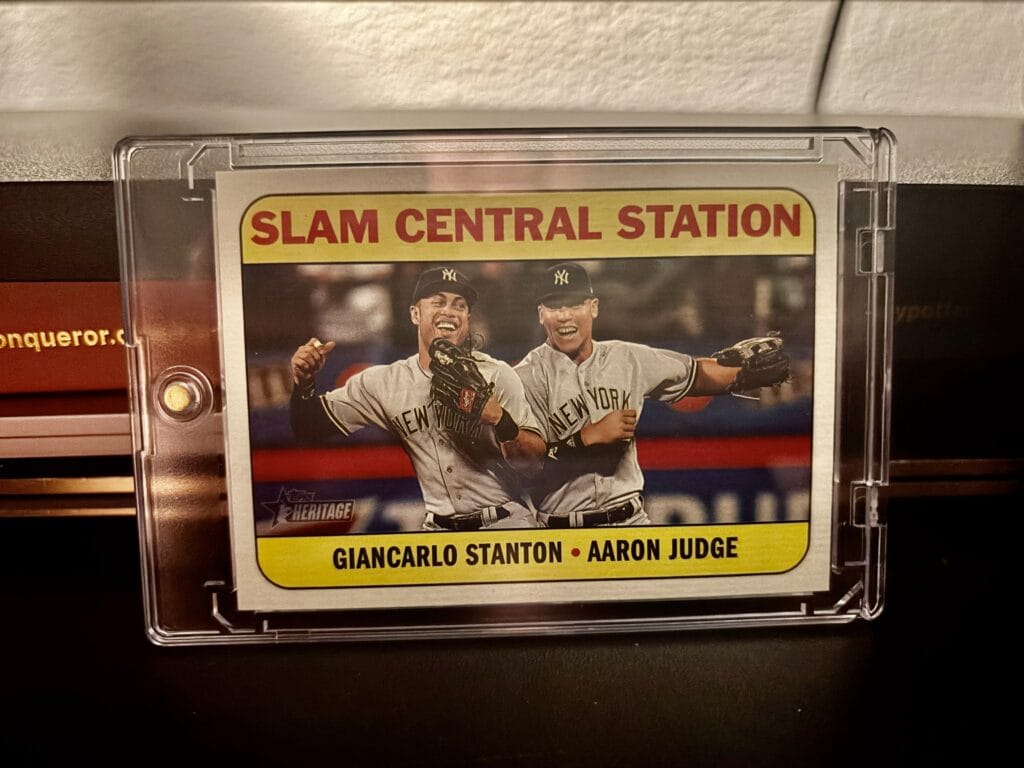
Photo of one of Dr. El’s favorite cards featuring Giancarlo Stanton & Aaron Judge Celeberating a Yankees Win